Product
Product Facts
- Product Name
- Aero P1 Chestprotector V2 - Senior
- Availability
- In Stock
- Fulfillment Type
- online
- Brand
- Aero
57.50 AUD
Aero's P1 Chest Protector V2 covers the whole chest with three layers of closed-cell EVA foam for shock absorption, in an extremely lightweight guard that is machine washable and made in multiple body sizes for a close fit. Medium or Large.Specifications
Coverage: Entire chest area
Material: Three layers of closed-cell EVA foam; extremely lightweight; machine washable
Sizes: Medium, Large
| Variant | Price | Availability |
|---|---|---|
| 8880000242526 | 57.50 AUD | |
| 8880000252526 | 57.50 AUD |
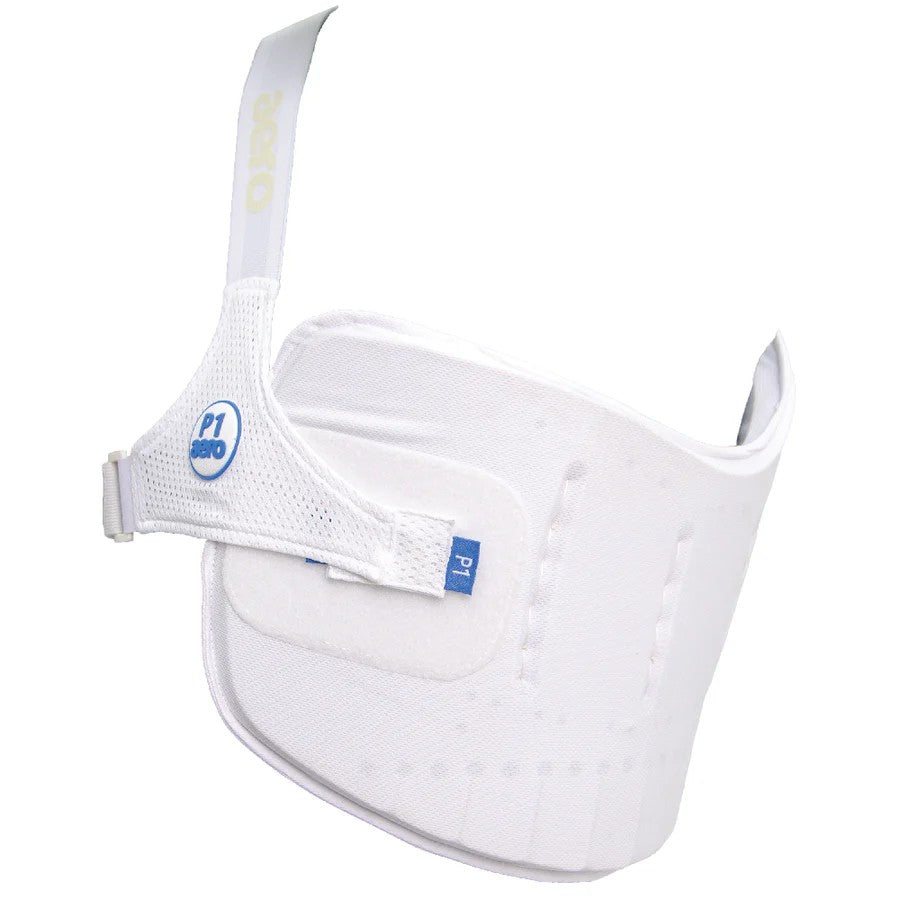
Aero P1 Chestprotector V2 - Senior
Aero P1 Chestprotector V2 - Senior at a glance
| Brand | Aero |
| Category | Protective |
| Price | $57.50 |
| Availability | In stock (2 of 2 variants) |
| Size | Large, Medium |
| SKU | 8880000242526, 8880000252526 |
| Tags | aero, chest-guard, protective-equipment, senior |
| Sold by | Cricket For All, Gilles Plains, South Australia |
Product description
Designed for elite batters, the Aero P1 Chest Protector V2 delivers maximum upper-body protection without compromising comfort or mobility. Featuring an upgraded triple-layer closed-cell EVA foam construction, the V2 provides enhanced impact absorption across the entire chest, giving you the confidence to face the fastest bowlers.
Its lightweight, ergonomic design contours naturally to the body for a secure, comfortable fit beneath your cricket shirt. The flexible construction allows unrestricted movement while batting, and the breathable, machine-washable materials ensure lasting comfort throughout training and match play. Rated for protection against ball speeds of up to 160 km/h, the P1 Chest Protector V2 is ideal for serious club, representative and professional cricketers.
Features
- Triple-layer closed-cell EVA foam for superior impact protection
- Elite shock absorption across the entire chest
- Lightweight construction for unrestricted movement
- Ergonomic design provides a secure and comfortable fit
- Machine washable for easy care
- Ambidextrous design suitable for right- and left-handed players
- Protection rated for ball speeds up to 160 km/h
Variants and availability
| Variant | Price | Was | SKU | In stock |
|---|---|---|---|---|
| Large | $57.50 | — | 8880000242526 | Yes |
| Medium | $57.50 | — | 8880000252526 | Yes |
Protective equipment: what each piece does
Beyond helmet, pads and gloves, the protective set covers the areas a cricket ball actually finds.
Abdominal guard (box)
Non-negotiable at every level and every age, batting and wicketkeeping. Worn inside supportive briefs or a purpose-made jockstrap. Sizes run junior through senior - a guard that is too large sits away from the body and is worse than useless because it deflects rather than absorbs. Replace after any significant impact and when the edge padding perishes.
Chest guard
Worn under the shirt, covering the sternum and lower ribs. Most valuable against genuine pace, on bouncy surfaces, and for junior players still learning to get inside the line. Sizes are by chest measurement. Some designs are handed - the leading shoulder side carries more coverage.
Arm guard
Worn on the leading forearm (left arm for a right-handed batter). Protects the forearm from the ball that lifts off a length. Should extend from just below the elbow to the wrist without restricting the top-hand grip. Frequently skipped by juniors and frequently the reason for a broken forearm.
Elbow guard
Sometimes combined with the arm guard. Covers the point of the elbow, particularly exposed when playing across the line or ducking.
Fitting principle
Protection works by staying in contact with the body at the moment of impact. Anything that slides, rotates or sits proud has moved out of position by the time the ball arrives. Every piece should be strapped firmly enough that a hard shake does not move it.
Building a complete protective set
Cricket protection works as a system. Each item covers an area the others do not, and injuries happen in the gaps. A player with an expensive helmet and no arm guard is protected against the injury that is rare and exposed to one that is common.
The full set, and what each piece is actually for
| Item | Protects against |
|---|---|
| Helmet | Ball to the head and face; the highest-consequence injury in cricket |
| Abdominal guard | Groin impact; mandatory at every level and age |
| Batting pads | Shin, knee and instep from balls beating the bat |
| Batting gloves | Fingers and thumbs, particularly the bottom hand |
| Thigh guards (inner and outer) | Deep muscle bruising from balls that beat bat and pad |
| Arm guard | Forearm fracture from a ball lifting off a length |
| Chest guard | Sternum and rib impact, particularly against pace and on bouncy wickets |
| Elbow guard | The point of the elbow when playing across the line or ducking |
Priority order when budget is limited
- Helmet to current standard, correctly fitted. Non-negotiable.
- Abdominal guard. Cheap and mandatory.
- Pads and gloves that fit properly - fit matters more than price.
- Thigh guards, inner and outer.
- Arm guard, especially for juniors and anyone facing genuine pace.
- Chest guard for juniors, and for players on bouncy surfaces.
Spending on a premium bat before completing the protective set is the most common junior kit-buying mistake.
The principle that governs all of it
Protection works by staying in contact with the body at the moment of impact. Anything that slides, rotates or sits proud of the body has moved out of position by the time the ball arrives, and dissipates far less energy than the same item correctly fitted.
This is why oversized protective equipment is genuinely more dangerous than correctly sized equipment, and why buying a junior a guard to "grow into" is a false economy in a way that buying an oversized shirt is not.
Materials and how they age
Most cricket protection uses high-density closed-cell foam, sometimes over a moulded shell. Foam absorbs energy by compressing. That compression is not perfectly elastic: after heavy impacts and over years, foam hardens and loses rebound.
Signs a protective item needs replacing:
- The foam feels hard rather than springy under thumb pressure.
- Visible permanent compression or cracking in the padding.
- Perished, brittle or torn edge binding.
- Straps or elastic that no longer hold tension.
- Any item that has taken a direct, heavy impact - particularly helmets.
Fitting checks before every use
Cricket protective equipment is only as good as the two minutes spent putting it on. Straps firm, wings outward on pads, guard handedness correct, helmet grille locked, abdominal guard seated inside supportive briefs. Most protective failures in club cricket are fitting failures rather than equipment failures.
Protective equipment terms
- Abdominal guard / box - rigid groin protection worn inside supportive briefs.
- Arm guard - forearm protection worn on the leading arm.
- Chest guard - sternum and rib protection worn under the shirt.
- Closed-cell foam - the high-density energy-absorbing material used in most cricket protection.
- Handedness - many guards are shaped for a specific side and are not interchangeable.
Common questions about protective equipment
Is an abdominal guard mandatory?
At every level and every age, batting and wicketkeeping. It is worn inside supportive briefs or a purpose-made jockstrap. A guard that is too large sits away from the body and deflects rather than absorbs, so size matters.
Who should wear a chest guard?
Junior players still learning to get inside the line, anyone facing genuine pace, and players on bouncy surfaces. It sits under the shirt over the sternum and lower ribs. Sized by chest measurement.
Which arm does an arm guard go on?
The leading forearm - the left arm for a right-handed batter. It should run from just below the elbow to the wrist without restricting the top-hand grip.
Why do juniors skip arm guards?
Because they are uncomfortable if poorly fitted and not visibly "necessary" until something happens. Forearm fractures from a ball lifting off a length are among the more common serious junior batting injuries, and an arm guard prevents most of them.
How do I know protective gear still works?
Foam compresses over time and after impacts. If a guard has taken a heavy blow, if the foam feels hard or has lost its rebound, or if the edge padding has perished, replace it. Protection works only while the material can still absorb energy.
Where this sits in the range
Cricket For All stocks 141 other protective items, priced from $7.99 to $470.00. At $57.50 this one sits around the middle of that range.
Closest alternatives in the same category, matched on shared product tags:
| Product | Brand | Price |
|---|---|---|
| Aero P1 Forearm Protector | Aero | $40.00 |
| Aero P1 Forearm Protector - Senior | Aero | $39.90 |
| Aero Groin Protector Shorts | Aero | $37.50 |
| Kookaburra Pro 1.0 Chest Guard - Senior | Kookaburra | $50.00 |
| Kookaburra PRO 6.0 PRO GUARD - SENIOR | Kookaburra | $50.00 |
| Kookaburra PRO 5.0 PRO GUARD - SENIOR | Kookaburra | $65.00 |
What to buy alongside
A helmet and abdominal guard are the two pieces most competitions require before a player takes strike.
About Aero
Aero is a New Zealand manufacturer specialising in protective equipment, particularly body and limb protection built around moulded foam technology.
Ranges this product appears in
- Senior Cricket Chest Guards — 10 products
- Protective Equipment — 31 products
- Shop All Protective Equipment — 47 products
- Senior Cricket — 541 products
- All Cricket Gear Except Balls — 1451 products
Buying from Cricket For All
Cricket For All is an Adelaide cricket centre and online store at Unit 1-2, 621-623 North East Road, Gilles Plains, South Australia. Free standard shipping applies to eligible Australian merchandise orders of A$100 or more before cart rewards. Standard shipping is A$15 otherwise; express is A$20. Exclusions and weight limits apply. See the current shipping policy at https://www.cricketforall.com.au/policies/shipping-policy for full terms.
The store sits inside a working cricket centre with indoor lanes and bowling machines, so equipment advice comes from nationally accredited coaches who see the same gear in use daily rather than from a catalogue. Trading hours are Monday to Thursday 12:00pm-10:00pm, Friday 12:00pm-9:00pm, and Saturday and Sunday 10:00am-6:00pm. Phone (08) 7095 5777 or email retail@cricketforall.com.au.
Price, variant and availability details reflect the catalogue when this page was compiled; the live product page carries current pricing and stock.
Images on This Page
-
https://www.cricketforall.com.au/cdn/shop/files/CricketForAll_CMYK.svg?v=1783640586&width=327
Cricket For All
-
https://www.cricketforall.com.au/cdn/shop/files/CricketForAll_WHITE.svg?v=1783640556&width=327
(no alt text)
-
https://www.cricketforall.com.au/cdn/shop/files/tours-thumb.jpg?v=1783996337&width=650
(no alt text)
-
https://www.cricketforall.com.au/cdn/shop/files/lanes-thumb.jpg?v=1783996357&width=650
(no alt text)
-
https://www.cricketforall.com.au/cdn/shop/files/PCE25V2M.jpg?v=1783045463&width=900
Aero P1 Chestprotector V2 - Senior
-
https://www.cricketforall.com.au/cdn/shop/files/PCE25V2M_2.jpg?v=1783045463&width=900
Aero P1 Chestprotector V2 - Senior
-
https://www.cricketforall.com.au/cdn/shop/files/P1_Chest_Pad.jpg?v=1788925543&width=1793
Aero P1 Chestprotector V2 - Senior — additional product view 1
-
https://www.cricketforall.com.au/cdn/shop/files/dsc-eco-10-kit-bag-4.jpg?v=1788611330&width=160
DSC Eco 10 Duffle Bag
-
https://www.cricketforall.com.au/cdn/shop/files/condor-surge-chest-guard.jpg?v=1788611337&width=600
DSC Condor Surge Chest Guard - Senior


